







AUTOCOOK Industrial Autoclaves
For sterilization, pasteurization, and thermal processing of food
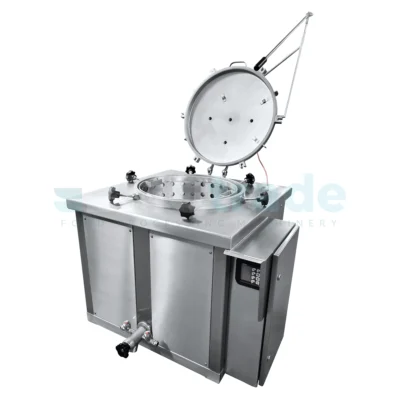
Industrial autoclaves are advanced devices designed for the thermal processing of food products under high pressure. They are used where product shelf life, microbiological safety, process repeatability, and the ability to extend the shelf life are critical.
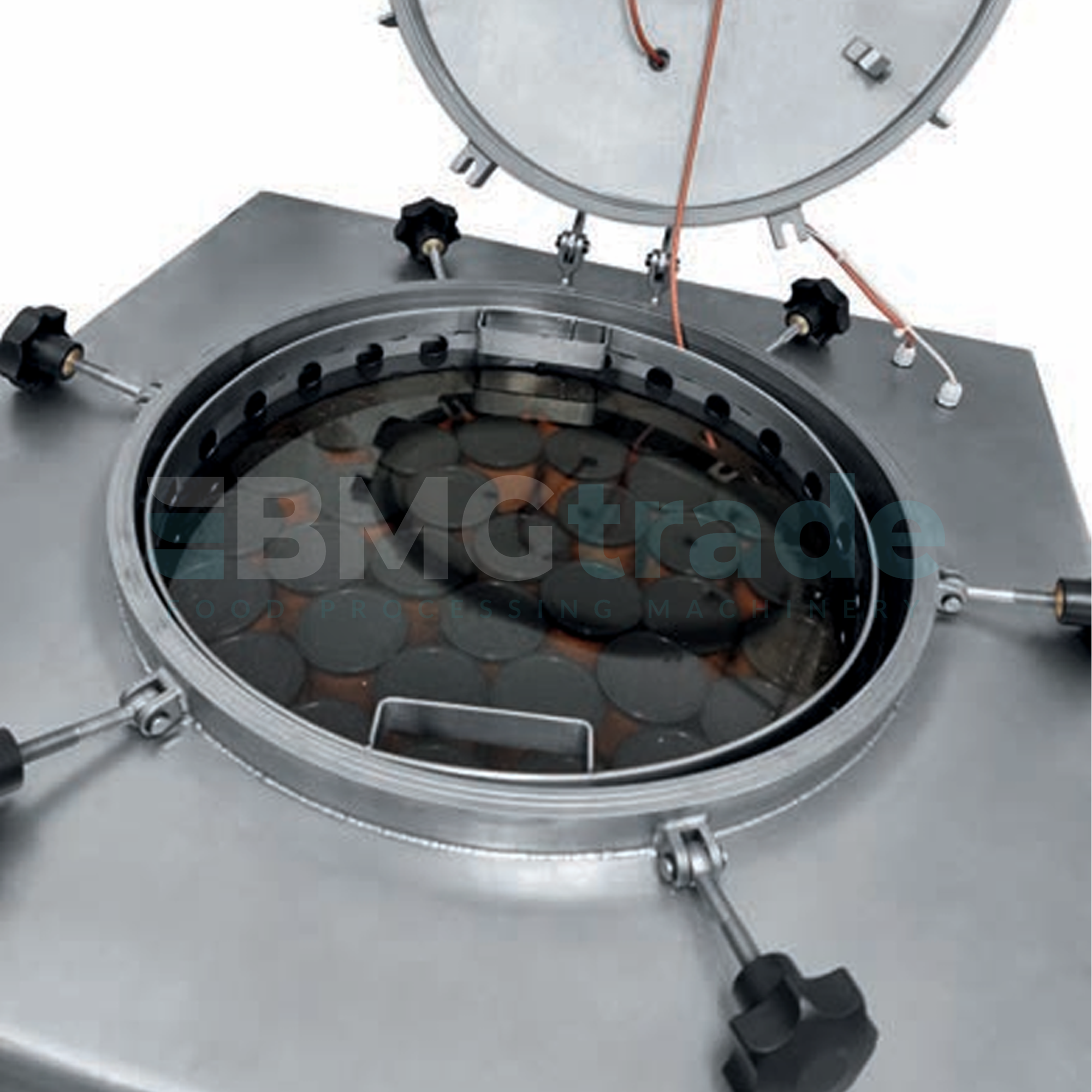
BMG Trade offers new industrial autoclaves used, among other things, for cooking, sterilization, pasteurization, steam treatment, and water treatment. Devices of this type are well-suited for facilities producing canned goods, ready-to-eat meals, products in jars, cans, and sealed packaging, as well as products requiring a controlled heat treatment process.
Applications of industrial autoclaves
Industrial autoclaves are used in many sectors of the food industry. They are most commonly used for processing products that require high temperatures and stable process conditions.
Applications:
- cooking,
- vacuum heating,
- pressure cooking,
- sterilization,
- steam or water pasteurization
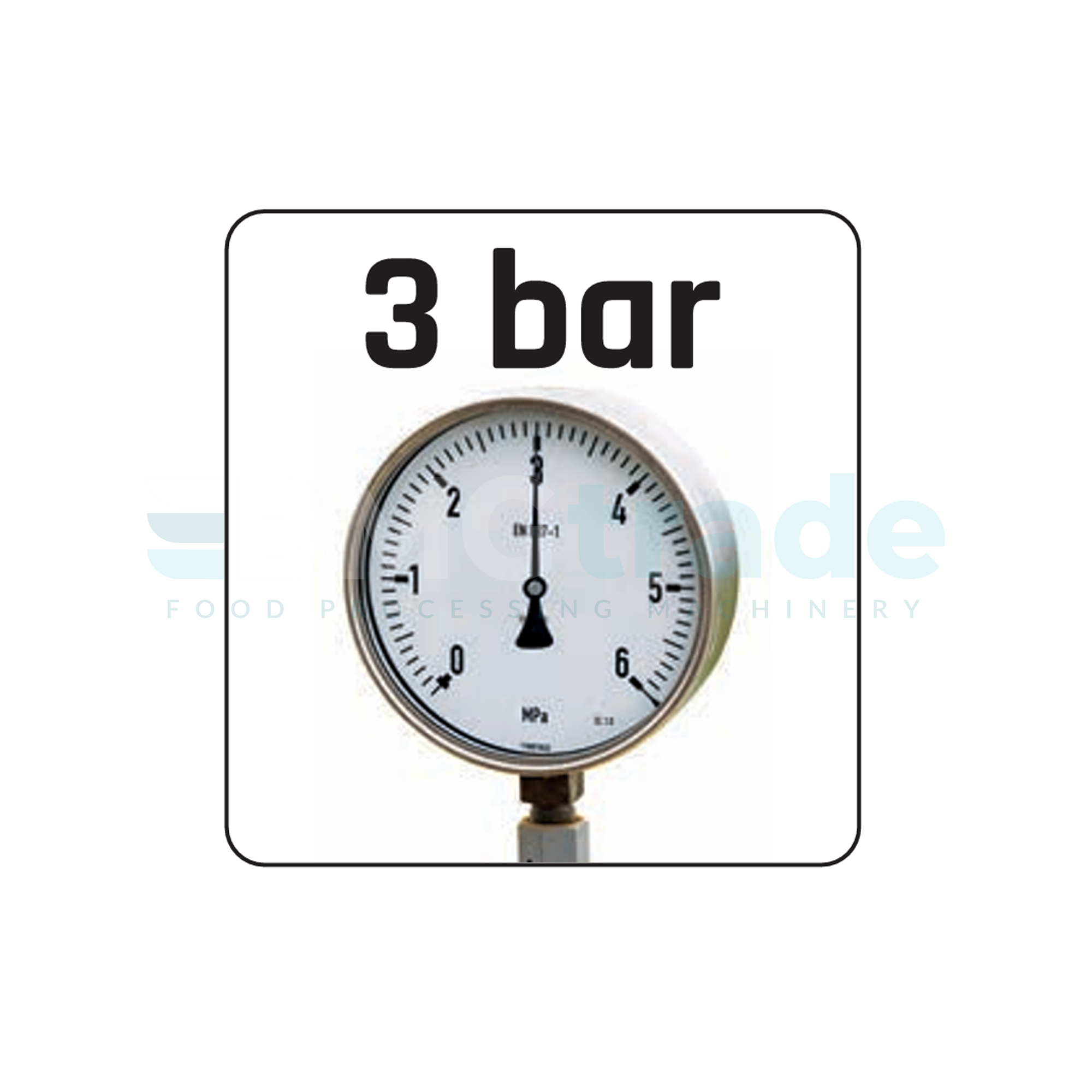
By operating under pressure, the autoclave can reach temperatures above 130°C, which significantly increases the effectiveness of the thermal processing. The manufacturer’s documentation indicates that an industrial autoclave can achieve an operating pressure of up to 3 bar, and cooking in autoclaves can reduce processing time by as much as approximately 70% compared to traditional methods.
Autoclave Design and Construction
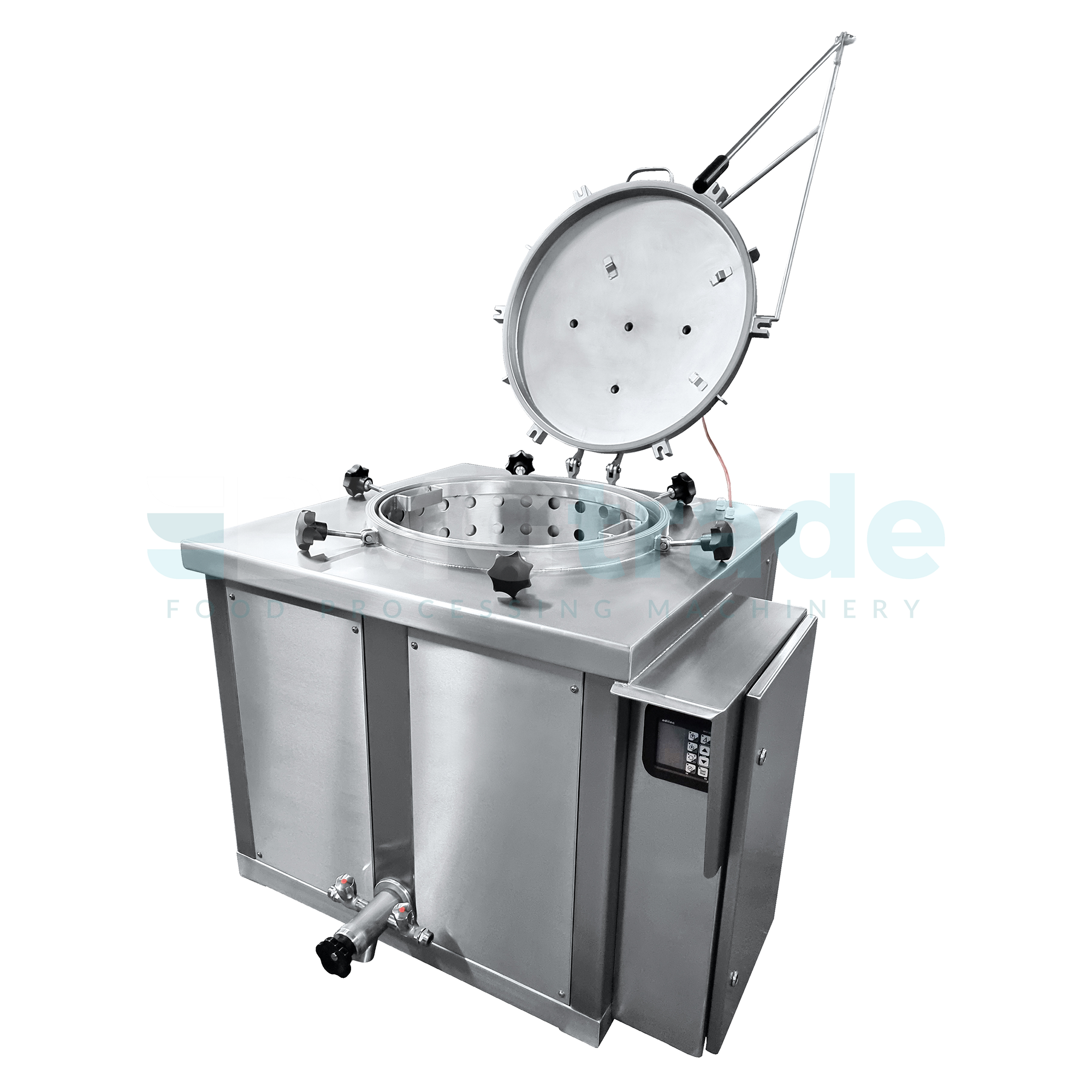
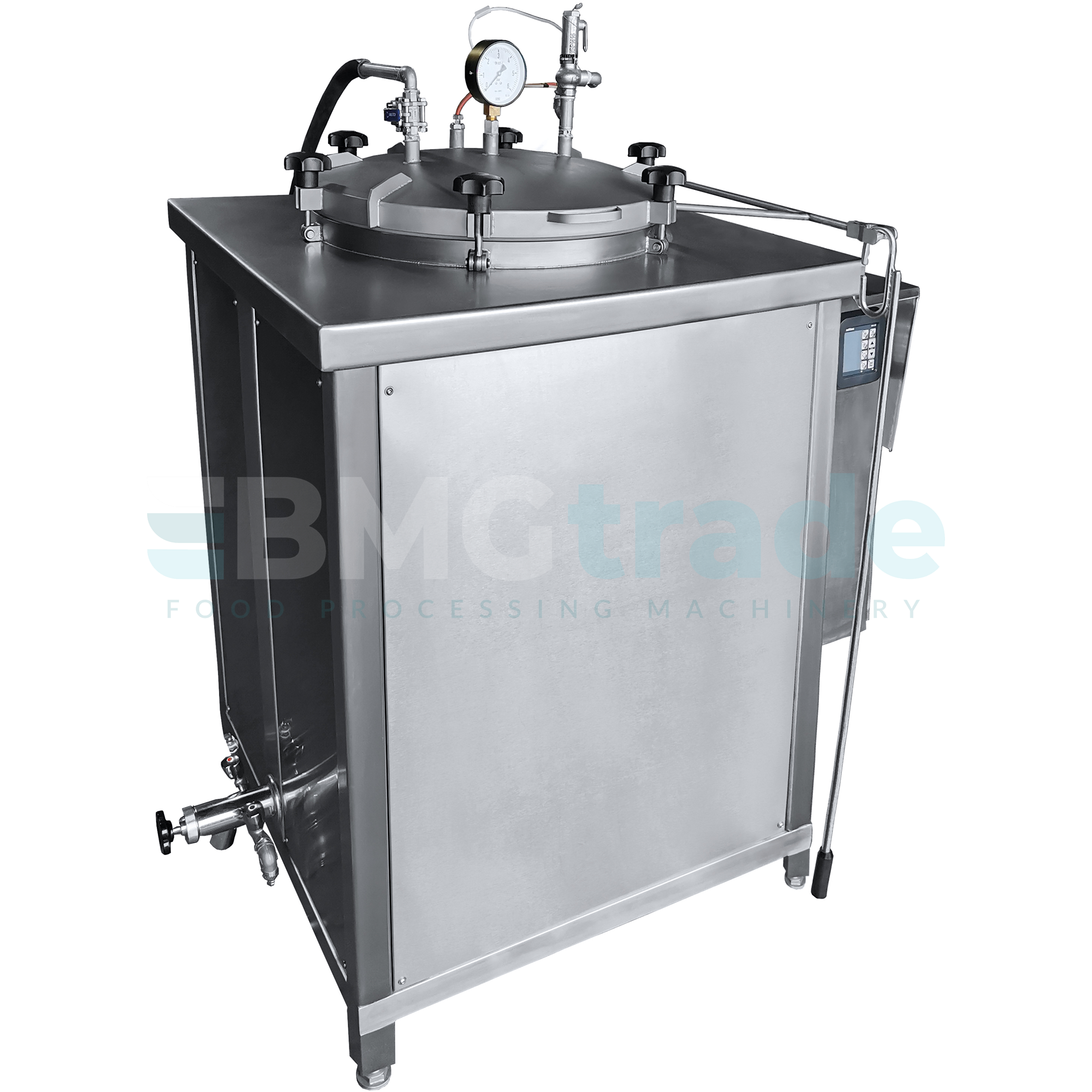
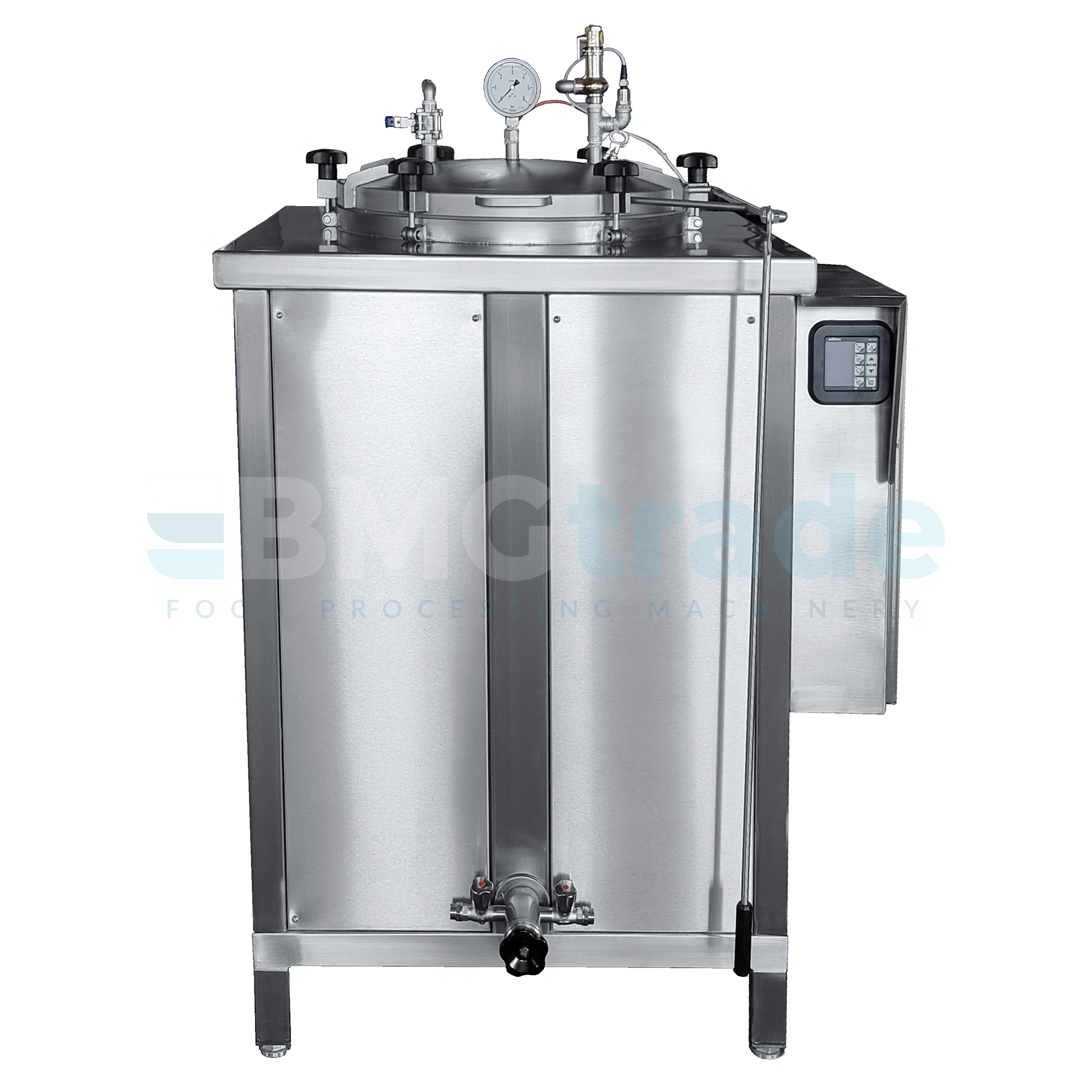
A professional industrial autoclave should be made of materials resistant to heavy-duty use, high temperatures, moisture, and cleaning agents. Therefore, such devices are manufactured from acid-resistant stainless steel approved for food contact.
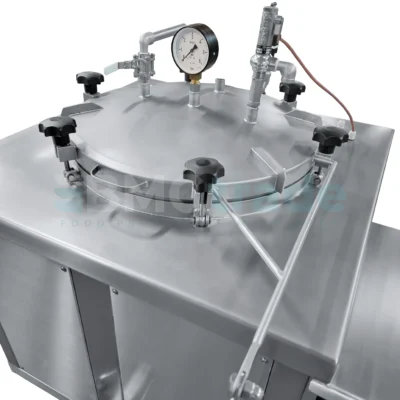
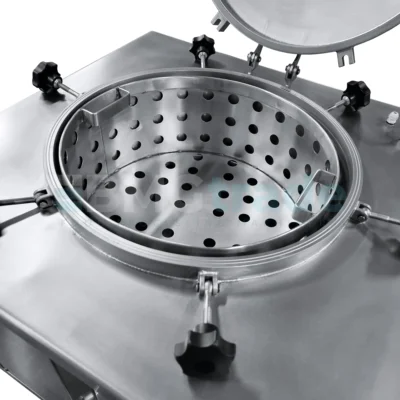
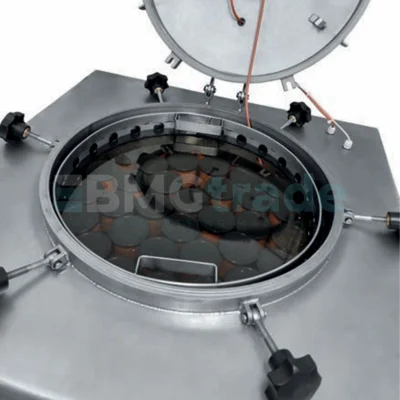
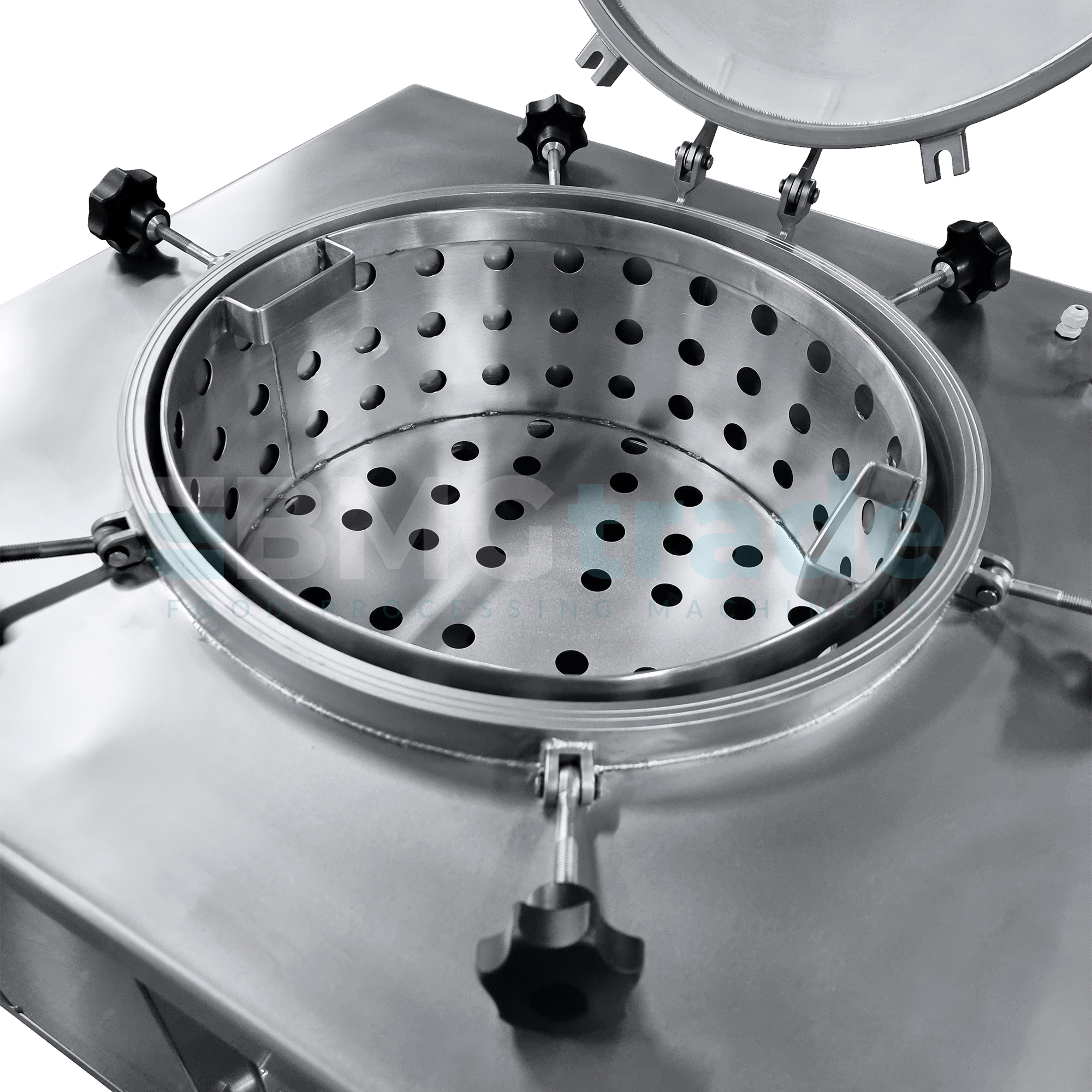
A typical autoclave design includes:
- a stainless steel working chamber,
- a sealed lid with a silicone gasket,
- a pressure-limiting safety valve,
- insulation to minimize heat loss,
- a loading basket,
- a process control system,
- an optional cooling and decompression system.
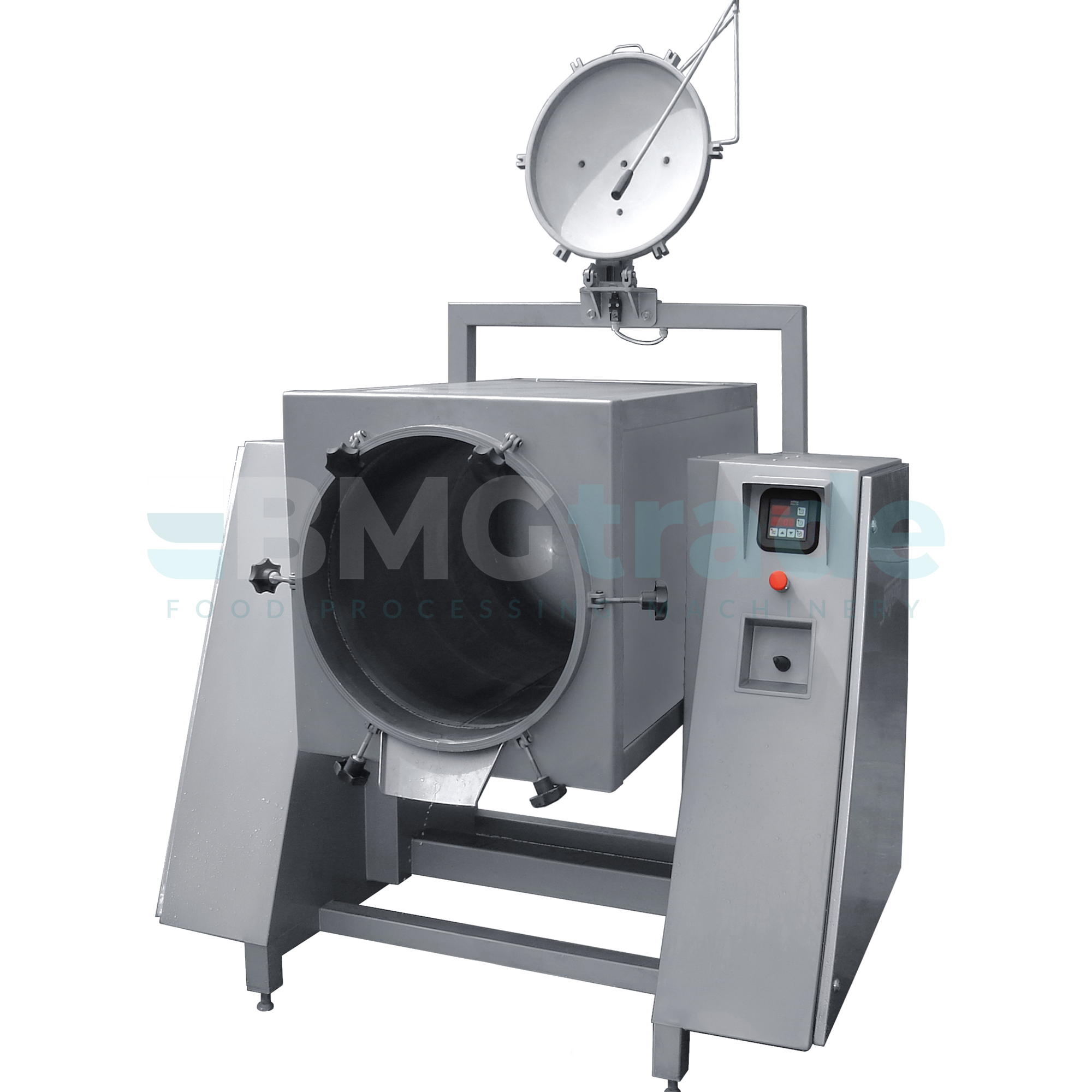
Autoclaves are available in standard, vertical, or tilting versions, depending on the operating method, loading procedure, and production facility requirements.
Capacity and heating systems
Industrial autoclaves are available in various capacities, allowing the unit to be tailored to the scale of production. Depending on the model, the working capacity is:
- 125 liters
- 150 liters
- 200 liters
- 250 liters
- 500 liters
- 600 liters
Available heating systems include:
- electric heating,
- steam heating – high-pressure steam,
- gas heating (GIERSCH burner)
- oil heating (GIERSCH burner)
The choice of heating system depends on the plant’s infrastructure, available utilities, operating costs, and type of production. In plants equipped with a steam system, steam autoclaves are very often selected. In smaller plants or where there is no steam system, electric or gas autoclaves may be a practical solution.
Process control
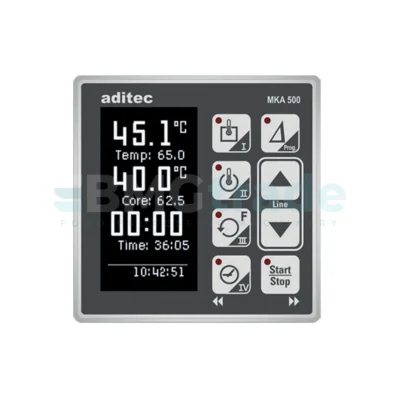
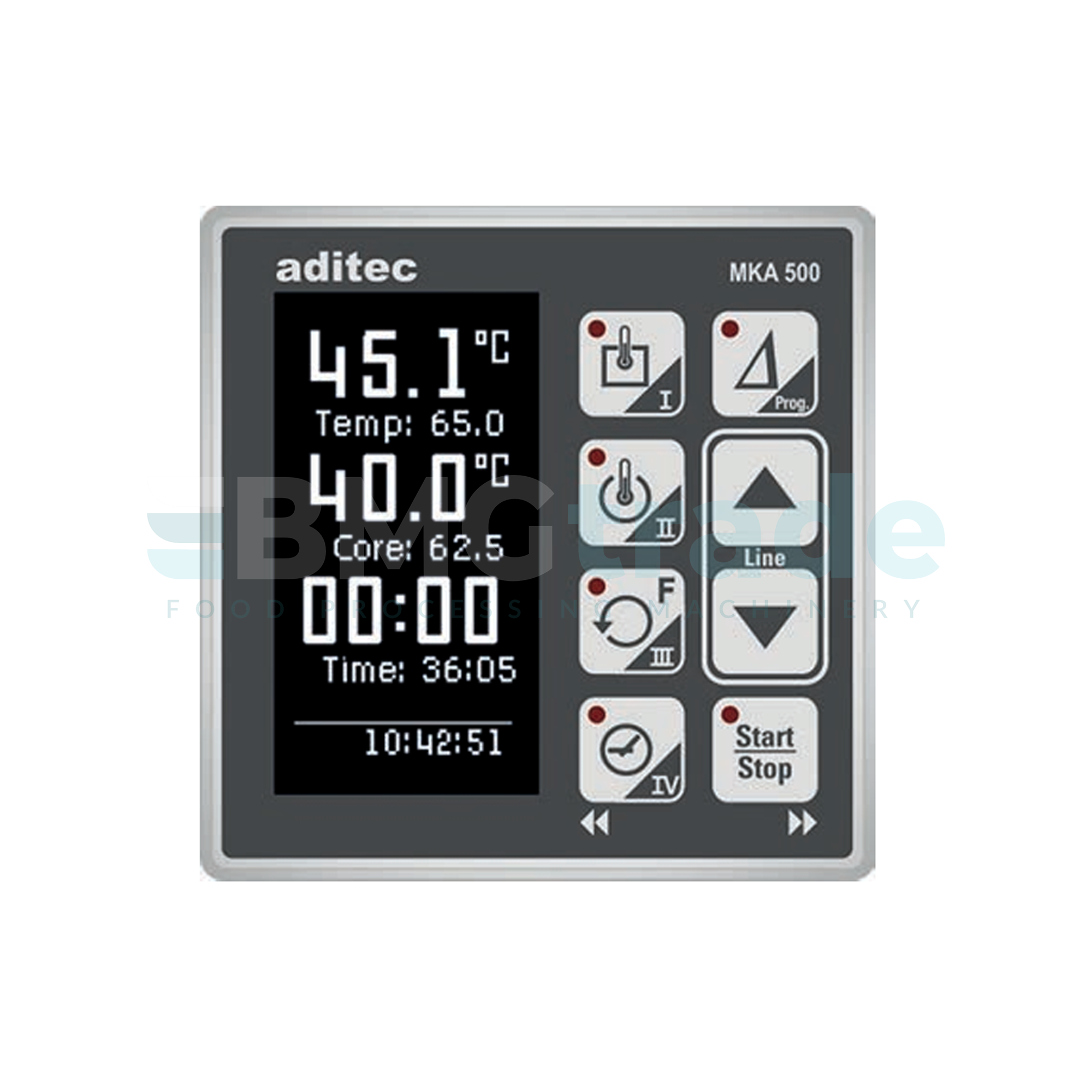
Modern industrial autoclaves are equipped with microprocessor-based controllers that allow for the monitoring of key operating parameters. The control system enables, among other things, monitoring of the autoclave temperature, load temperature, process time, and process settings.
Depending on the equipment, the device can integrate with a data monitoring and archiving system, which is particularly important in facilities operating according to quality and audit procedures.
Thanks to electronic control, the operator can conduct the process in a repeatable manner, reduce the risk of errors, and better document production parameters.
Why use an industrial autoclave?
The greatest advantage of industrial autoclaves is the ability to perform effective thermal processing under controlled conditions. The device allows for high temperatures, maintains stable process parameters, and ensures safe storage conditions for products.
The most important benefits include:
- extended product shelf life,
- greater microbiological safety,
- process repeatability,
- shorter processing time compared to traditional methods,
- the ability to work with various types of packaging,
- better control of temperature and time,
- customization of the device to specific production needs.
Industrial autoclaves are particularly important in the production of packaged, canned, and ready-to-sell food products for retail or wholesale.
Industrial autoclaves for food processing plants
At BMG Trade, we supply machinery for the food industry, including equipment for thermal processing, sterilization, and pasteurization. We help you select a solution tailored to your product type, required capacity, and available technical infrastructure.
If you are looking for an autoclave for the production of canned goods, ready-to-eat meals, jarred products, or other items requiring controlled heat treatment, please contact us. We will advise you on the best type of autoclave for your facility and present the available solutions.