
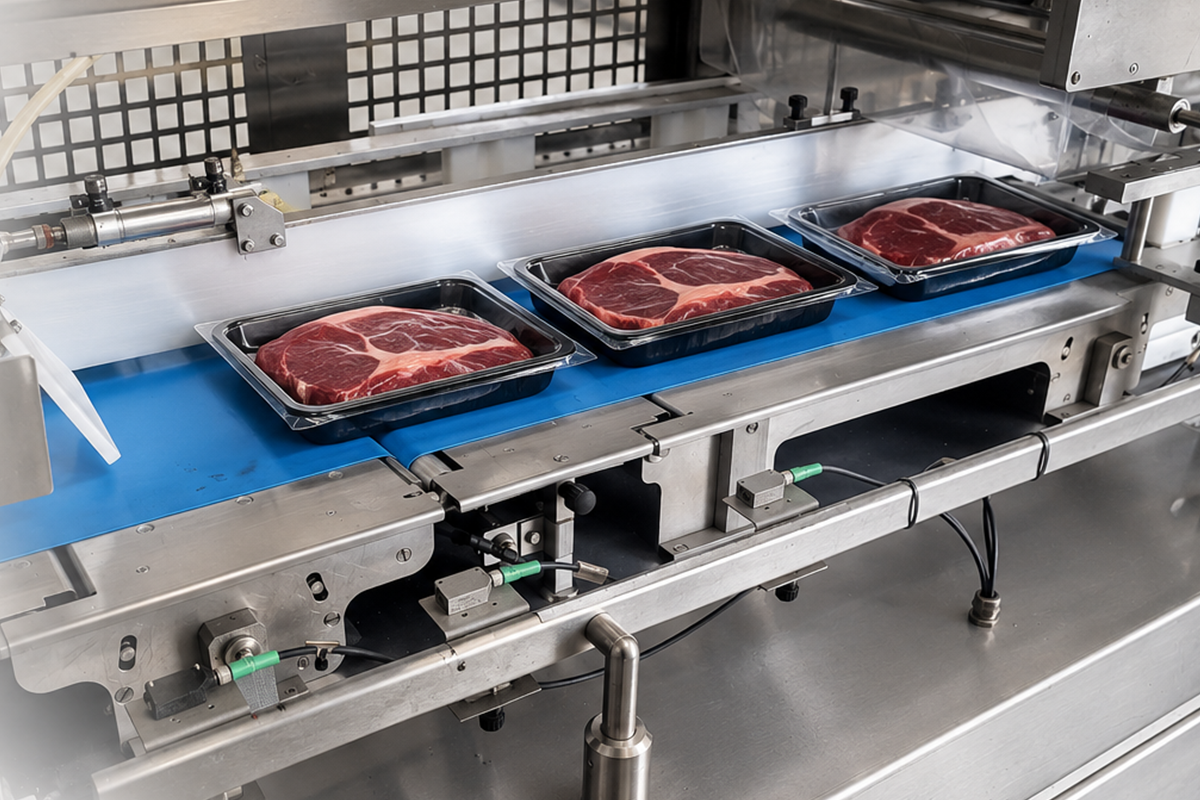
Food packaging is a key aspect of the food industry, affecting product safety, shelf life, and appeal. In this article, we will discuss two popular types of packaging – vacuum packaging and MAP technology – which are widely used in the industry. You will also find advice on which food packaging machines to choose to achieve optimal efficiency. There are various food packaging systems available on the market, as well as innovative automatic industrial packaging machines that can significantly streamline the production process. We will also consider the role of metal detectors and labeling machines, which complement production lines.
How vacuum packaging works and the most popular devices
Vacuum packaging of food involves removing air from the package and creating an airtight environment that significantly extends the shelf life of products. This process prevents oxidation, the growth of bacteria and mold, and the loss of flavor. As a result, food stays fresh longer and is more resistant to changes in temperature and humidity. Specialized food packaging machines play a key role in this process, ensuring precise air removal and a tight seal on the packaging.
Among the most commonly used devices for vacuum packaging are automatic industrial packaging machines, which offer high performance and the ability to operate continuously. These machines are equipped with advanced control systems that allow packaging parameters to be adjusted to the specific needs of the product. Automatic industrial packaging machines are particularly valued in large production facilities where the speed and reliability of the packaging process are critical.
Advantages of using MAP technology in product packaging
MAP technology in food packaging involves modifying the atmosphere inside the package. Changing the composition of gases such as oxygen, carbon dioxide, and nitrogen allows for a significant extension of the shelf life. This solution has a positive impact on product quality and freshness. The most important advantages of using this technology include:
- Extending product shelf life without the need for preservatives.
- Preservation of the natural taste, aroma, and texture of food.
- Reduction of losses due to product spoilage.
- The ability to package a wide range of food products, from meat to vegetables.
MAP technology utilizes advanced food packaging machines that enable precise dosing of gases in the correct proportions. Food packaging systems using this technology are highly automated and can be easily integrated with other production lines. This makes them an ideal solution for companies seeking to increase efficiency and the quality of their products.
Which food packaging machines are the most efficient
Choosing the right food packaging machines is crucial for maintaining high product quality and production efficiency. The most efficient food packaging machines combine modern technologies with high performance, allowing for the optimization of every stage of the packaging process. Automatic industrial packaging machines are extremely useful for companies that need a fast and reliable solution. Thanks to advanced control systems and the ability to operate continuously, they ensure the efficient packaging of large batches of products.
In addition to process automation, ensuring the safety of packaged products is equally important. To this end, industrial metal detectors are used to help detect any metal contaminants that may enter the packaging. This not only enhances safety but also builds consumer trust in the brand. Investing in modern food packaging machines that incorporate metal detectors is a step toward improving the quality and safety of food products.
When to Invest in Automatic Packaging Machines
Investing in automatic industrial packaging machines is beneficial in several key situations that impact a company’s growth. First and foremost, when production reaches a level where manual packaging becomes insufficiently efficient, automation can significantly increase the pace of work. Automatic industrial packaging machines are the ideal solution for facilities that need to increase productivity, minimize human error, and reduce operating costs. Thanks to them, the production line becomes more organized and can effectively meet growing demand.
In addition to packaging, labeling is a critical stage of production that impacts product identification and tracking. By investing in product labeling machines, manufacturers can achieve greater precision and consistency in product marking. These machines are particularly useful in large enterprises where speed and accuracy are paramount. Automating these processes allows for flexible adaptation of production to changing market needs and increases the company’s competitiveness.
Food packaging systems tailored to various needs
Food packaging systems must be tailored to the diverse needs arising from the characteristics and specific nature of the products. For products sensitive to oxygen and moisture, vacuum food packaging is an excellent choice. It creates an airtight environment that protects the product from spoilage and extends its freshness. Conversely, for products requiring additional protection and an extended shelf life, MAP technology in packaging is indispensable. It allows for the modification of the atmospheric composition inside the package, ensuring better storage conditions.
The combination of vacuum packaging and MAP technology can be extremely effective, especially for high-value-added products. This dual-pronged approach enables maximum protection and quality, which is crucial for products that are exported or stored for extended periods. Various food packaging systems offer flexibility and the ability to adapt to specific market requirements, making them an essential element of any modern manufacturing company’s strategy.
The Role of Metal Detectors in the Food Packaging Industry
Industrial metal detectors play a key role in ensuring food safety and quality throughout the packaging process. Their primary task is to detect potential metal contaminants that may appear at various stages of production. This ensures that consumers can be confident they are receiving products of the highest quality. These detectors are particularly important in the food industry, where any contamination can lead to serious health consequences.
Integrating metal detectors with other food packaging machines, such as automatic industrial packaging machines, allows for the creation of a comprehensive quality control system. This type of integration is essential to ensure the smooth operation and efficiency of the production line. Industrial metal detectors work in tandem with packaging machines, enabling a rapid response to any detected contaminants. This, in turn, minimizes risk, protects the brand’s reputation, and increases consumer confidence in the products offered.
Labeling as the final stage of food packaging
Labeling is a key final stage of food packaging that ensures full product identification and presentation. Properly selected product labeling machines enable precise and rapid application of labels to each package, which is essential for visual consistency and regulatory compliance. Labels provide consumers with essential information about ingredients, nutritional values, and expiration dates, which increases trust in the product.
Integrating labeling machines with food packaging systems ensures the smooth operation of the entire production line. Product labeling machines work in conjunction with other equipment, such as food packaging machines, enabling process automation and reducing errors and costs. This investment translates into improved efficiency and quality in the food industry.